
Think staying near the Eiffel Tower is the smart move? Think again.
Where you sleep will change how much you see, how far you walk, and how tired you are each night.
For most first-time visitors, Le Marais is the best bet, central, walkable, and on several useful metro lines.
If you want history on a budget, pick the Latin Quarter.
If you crave classic cafes and quieter streets, aim for Saint-Germain-des-Prés.
This post helps you choose the neighborhood that fits your pace, budget, and must-see list.
Paris First-Timer Picks at a Glance
Le Marais is the best overall choice for most first-time visitors. It puts you within walking range of Notre-Dame, the Seine, Place des Vosges, and the Pompidou Centre, and it sits on useful metro lines that make day-tripping across the rest of the city simple. If you’re wondering what arrondissement to stay in Paris and don’t want to overthink it, this is the safe answer.
That said, Le Marais isn’t the only smart move. The Latin Quarter works well if you’re picking a neighborhood based on history and budget. It’s packed with centuries of academic atmosphere around the Sorbonne, and rooms tend to cost less, though some streets get loud with student nightlife. Saint-Germain-des-Prés is the pick for travelers who want an elegant, slower paced base. Think classic cafés and tree lined streets. But be ready to pay for it. This is one of the priciest pockets in central Paris.
Plan for 4 to 5 days if this is your first visit. That’s enough time to settle into a neighborhood, explore on foot, and still take a day trip without feeling rushed.
| Neighborhood | Best For | Landmark Access | Metro Convenience | Typical Budget | Safety Context | Main Drawback |
|---|---|---|---|---|---|---|
| Le Marais | First timers wanting a central, walkable base | Notre-Dame, Place des Vosges, Pompidou Centre | Strong, multiple lines | $$$ | Generally comfortable, watch belongings in crowds | Can be pricey and noisy on busy streets |
| Latin Quarter | Budget conscious history lovers | Notre-Dame, Panthéon, Luxembourg Gardens | Strong, RER and metro access | $$ | Mostly fine, lively late evening pockets near Saint-Michel | Student nightlife noise in spots |
| Saint-Germain-des-Prés | Elegant, quieter, upscale stay | Seine-side streets, museums, Left Bank cafés | Strong, central lines | $$$$ | Comfortable, some tourist targeted theft near landmarks | High accommodation and dining prices |
Budget key: $$ = moderate, $$$ = upper moderate, $$$$ = high end. These are relative to central Paris overall, not citywide averages.
Understanding Paris Geography and Arrondissements
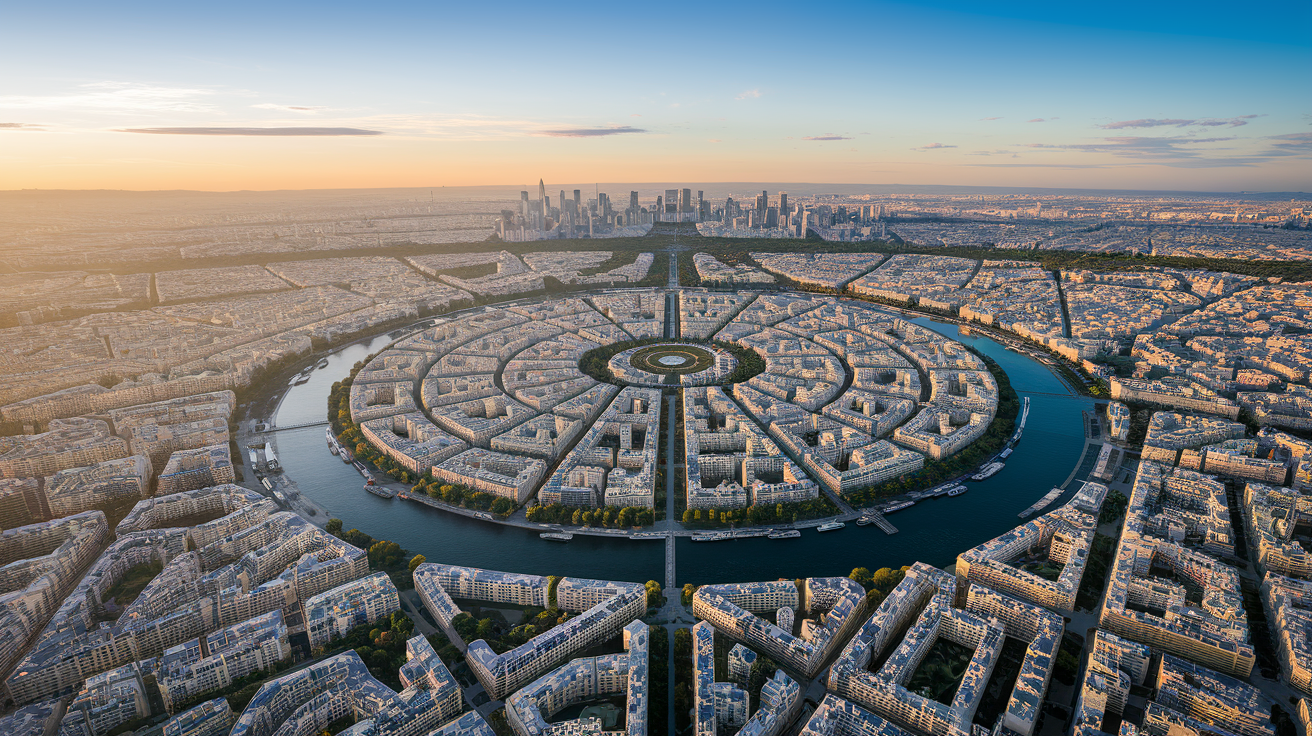
Paris is built from 20 arrondissements that spiral clockwise out from the center, starting with the 1st near the Louvre and winding outward like a snail shell until it reaches the 20th in the east. This isn’t random. Once you know the pattern, you can glance at a map and guess roughly where you are just from the number. It shows up in addresses too. The last two digits of any Paris postal code reveal the arrondissement, so 75010 is the 10th, and 75001 is the 1st.
The Seine splits the city into two halves with distinct personalities, at least in a loose sense. The Right Bank, or Rive Droite, traditionally carried more commerce and grandeur. The Left Bank, or Rive Gauche, leaned bohemian and academic. Two small islands sit right in the middle of the river, Île de la Cité and Île Saint-Louis, home to Notre-Dame and some of the oldest streets in the city. These associations are useful for getting a feel for an area, but they’re not strict rules. Plenty of Right Bank streets feel quiet and residential, and plenty of Left Bank corners are packed with tourists.
Here’s the part that trips people up. The arrondissement number alone doesn’t tell you how long your commute will actually be. A hotel in the 4th could be a five minute walk to Notre-Dame, or it could be twenty minutes away near the edge of the district. What actually matters is the exact hotel location, how far it is from the nearest station, whether that station sits on a direct line to where you’re headed, how many transfers you’ll need, whether you’ll be crossing the river, and how that walk feels at eleven at night after a long day of sightseeing. Compare door to door travel time, not just the number on the building.
Detailed Profiles of the Main Areas
Two hotels in the same arrondissement, even on the same block, can offer a completely different experience depending on which street they’re tucked into. Micro location affects how far you’ll walk to dinner, how much street noise comes through your window, and how close you really are to the metro stop you’ll use every single day.
Le Marais (3rd & 4th Arrondissements)
Staying near Saint-Paul and Place des Vosges feels different from staying around Rue des Archives or closer to Rambuteau and the Pompidou Centre. The Saint-Paul pocket leans quieter and more residential, with a short 15 to 20 minute walk to Notre-Dame. Rue des Archives puts you in the thick of boutique shopping and restaurants. Near Rambuteau, you’re closer to the Pompidou’s crowds and a 20 to 25 minute walk to the Louvre, depending on your exact starting point. Hôtel de Ville, Saint-Paul, and Rambuteau stations, served by lines 1 and 11, keep the whole area well connected. Dining ranges from casual falafel counters to sit down bistros, and evenings stay lively well past dinner. Expect upper midrange to expensive hotel rates. Crowds on the main shopping streets mean pickpocketing is worth a bit of extra awareness, nothing more
Final Words
Le Marais is the top pick for most first-time visitors — walkable, full of cafés, and near Notre-Dame and the Pompidou.
Latin Quarter suits history-minded, budget travelers; Saint-Germain is elegant and quieter but costs more.
The guide also explains arrondissements, why exact hotel location and metro connections matter, and profiles key areas from Montmartre to the Louvre.
If you’re choosing the best neighborhood to stay in Paris for first-time visitors, focus on metro access, evening noise, and your budget — pick what fits, and you’ll be set for a great 4–5 day introduction.
FAQ
Q: Where to stay in Paris for first time travellers?
A: The best area to stay in Paris for first-time travellers is Le Marais; Latin Quarter suits budget and history lovers, and Saint-Germain-des-Prés fits those wanting elegant cafés—expect noise, crowds, or higher prices.
Q: What is the most popular way of getting around in Paris?
A: The most popular way of getting around in Paris is the metro, thanks to its speed and frequency; use RER trains for suburbs, buses for scenic routes, and walk short hops, buying a carnet or day pass.
Q: What are the no-go zones in Paris?
A: The no-go zones in Paris are rarely formal; avoid poorly lit outer suburbs late at night, be cautious of pickpockets in busy tourist spots and some metro stations, and trust your instincts.
Q: What is Paris famous for?
A: Paris is famous for iconic sights like the Eiffel Tower and the Louvre, world-class food and cafés, the Seine and historic neighbourhoods, top museums, fashion, and lively street-side culture.