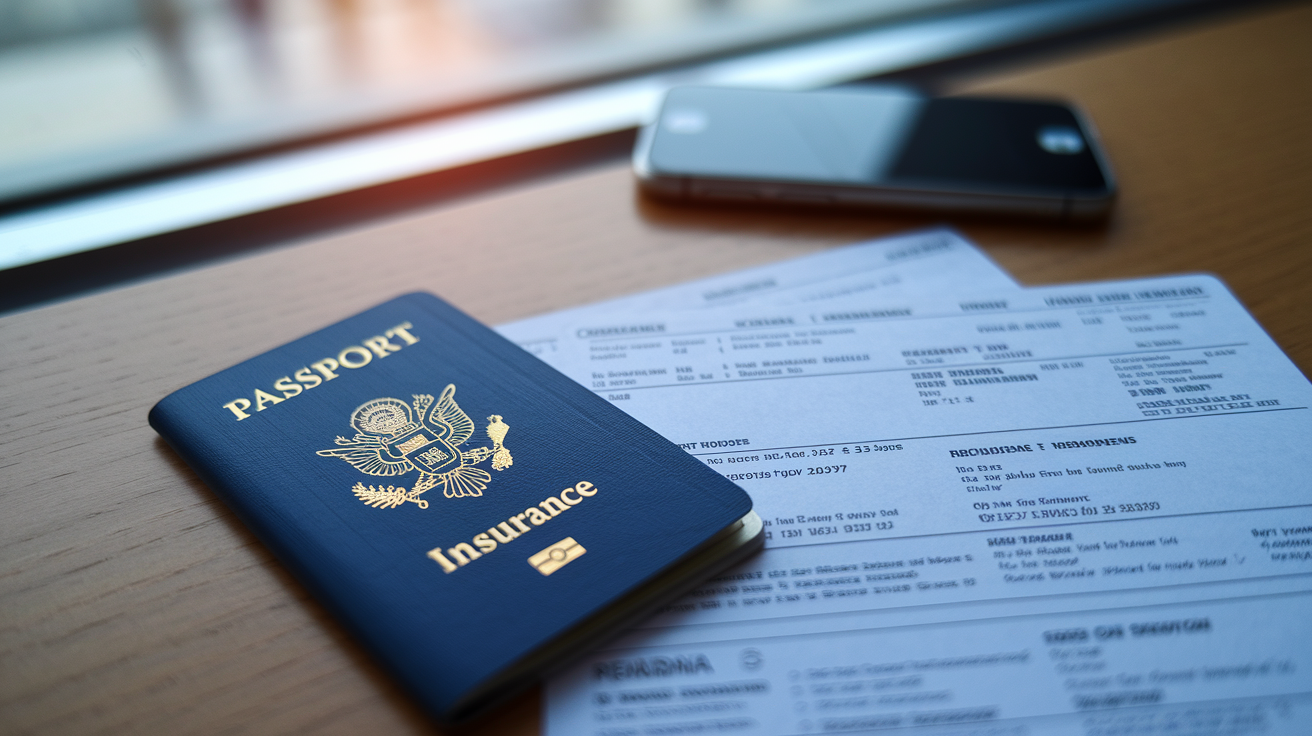

Think a long weekend abroad is too short to need travel insurance?
For most short international trips, buying travel insurance is worth it.
A few days don’t lower the stakes; a single medical emergency, canceled flight, or evacuation can cost far more than the trip.
Short-trip policies usually run about 5 to 10% of your total trip cost, a modest price for real protection.
The real question is what your existing coverage includes and how much risk you’re willing to carry.
The Short Answer For Brief Overseas Travel

For most short international trips, travel insurance is worth buying. The real question isn’t whether you need it, it’s what you already have covered and how much risk you’re willing to carry if something goes sideways far from home.
A short trip means fewer days for something to go wrong, sure. But that doesn’t make a medical emergency cheaper, a flight cancellation less annoying, or an evacuation any less necessary if you actually need one. Standard short-trip travel insurance policies typically run about 5 to 10% of your total trip cost. That’s a modest price next to what an uncovered emergency could actually cost you.
Before you decide, run through these questions:
- Where are you going, and what’s the healthcare like there?
- Do you already have coverage that works overseas?
- How much of this trip is nonrefundable if you have to cancel?
- Are you planning any activities that might fall outside standard coverage?
- If something went wrong, how much could you comfortably pay out of pocket?
What Counts As A “Short” International Trip For Insurance Purposes
(((alt-img2)))
There’s no universal rule here. Most insurers treat anything under a week to 10 days as a short trip, but the exact cutoff varies by company. And this matters, because it shapes which policy type actually makes sense for you.
Single-trip travel insurance covers one itinerary, starting from the policy’s effective date and running through the end of that specific trip. It’s the straightforward option if you just need coverage for one international trip, like a long weekend in Lisbon or a week in Tokyo. You pay once, you’re covered for that trip, and the policy ends when you get home.
Annual or multi-trip plans work differently. They cover multiple journeys across a 12-month period, which can save you money if you travel internationally several times a year. The catch? These plans often cap how long any single trip within that year can last, usually somewhere between 30 and 90 days, and cancellation benefits may be thinner per trip compared to a dedicated single-trip policy.
| Plan Type | Coverage Period | Common Duration Structure | Key Limitation |
|---|---|---|---|
| Single-Trip | Purchase date through trip end | One itinerary, no fixed cap | Must rebuy for each new trip |
| Annual/Multi-Trip | 12 months from activation | Multiple trips, each capped (often 30 to 90 days) | Lower per-trip cancellation limits |
If you take two or three short international trips a year, an annual plan might save you money overall. Just know that each trip still has to fit inside the plan’s duration rules, and the cancellation coverage per trip may not match what a dedicated single-trip plan offers.
What Does Travel Insurance Cover On A Short Trip
(((alt-img3)))
Coverage only kicks in when your situation matches the policy’s specific definitions and listed reasons. This is where a lot of travelers get caught off guard, not because the policy was bad, but because they assumed broader coverage than what was actually written into the fine print.
| Benefit | What It Covers | Typical Claim Trigger | Exclusions Or Limits To Check |
|---|---|---|---|
| Emergency Medical Treatment | Doctor visits, hospital stays, emergency procedures abroad | Sudden illness or injury during the trip | Pre-existing conditions often excluded |
| Evacuation Or Repatriation | Emergency transport to adequate care or home | Medical condition can’t be treated locally | May require pre-approval from assistance line |
| Cancellation Or Interruption | Reimbursement for prepaid, nonrefundable costs | Covered reason like illness, death, or job loss | Foreseeable events at time of purchase excluded |
| Travel Delay | Meals and lodging during a long delay | Delay of about 6 to 12 hours, varies by insurer | Daily and total payout caps apply |
| Missed Connections | Extra transport or lodging costs | Missed connection for a covered reason | Weather or mechanical delays may need documentation |
| Baggage Loss Or Delay | Replacement costs for lost or delayed items | Airline confirms loss or significant delay | Per-item caps often $500 to $1,000 |
| 24/7 Assistance | Medical referrals, translation, emergency cash help | Any covered emergency during travel | Service quality varies widely by insurer |
Documentation makes or breaks most claims. Keep your receipts, medical records, police reports for theft, and airline delay notices. For baggage claims specifically, expect per-item caps in the $500 to $1,000 range. High-value items like cameras, jewelry, and laptops are either excluded outright or need a separate rider plus proof of ownership.
Other common gaps include pre-existing medical conditions (unless you’ve bought a waiver within the insurer’s window) and adventure activities like scuba diving or skydiving.
Final Words
If you have nonrefundable costs, plan remote activities, or face limited overseas care, buy coverage. The article walked through what counts as a short trip, the core benefits to check, and the typical 5–10% premium range for basic plans.
If you’re asking “do I need travel insurance for a short international trip”, run the quick checklist: destination, existing coverage, refundability, planned activities, and your ability to pay unexpected bills. Close the biggest gap and travel with one less worry.
FAQ
Q: Is travel insurance worth it for short and international trips?
A: Travel insurance is usually worth it for short and international trips if you risk nonrefundable costs or emergency medical or evacuation bills; standard policies often cost about 5–10% of the trip price.
Q: What is the best short-term medical insurance for international travel?
A: The best short-term medical insurance for international travel depends on destination, pre-existing conditions, and evacuation needs; aim for at least $50,000 in medical cover, strong evacuation benefits, and 24/7 assistance.
Q: What happens if I don’t buy travel insurance?
A: If you don’t buy travel insurance, you’ll pay for medical care, evacuation, cancellations, or lost baggage yourself—these costs can be large and may require immediate out-of-pocket payments abroad.